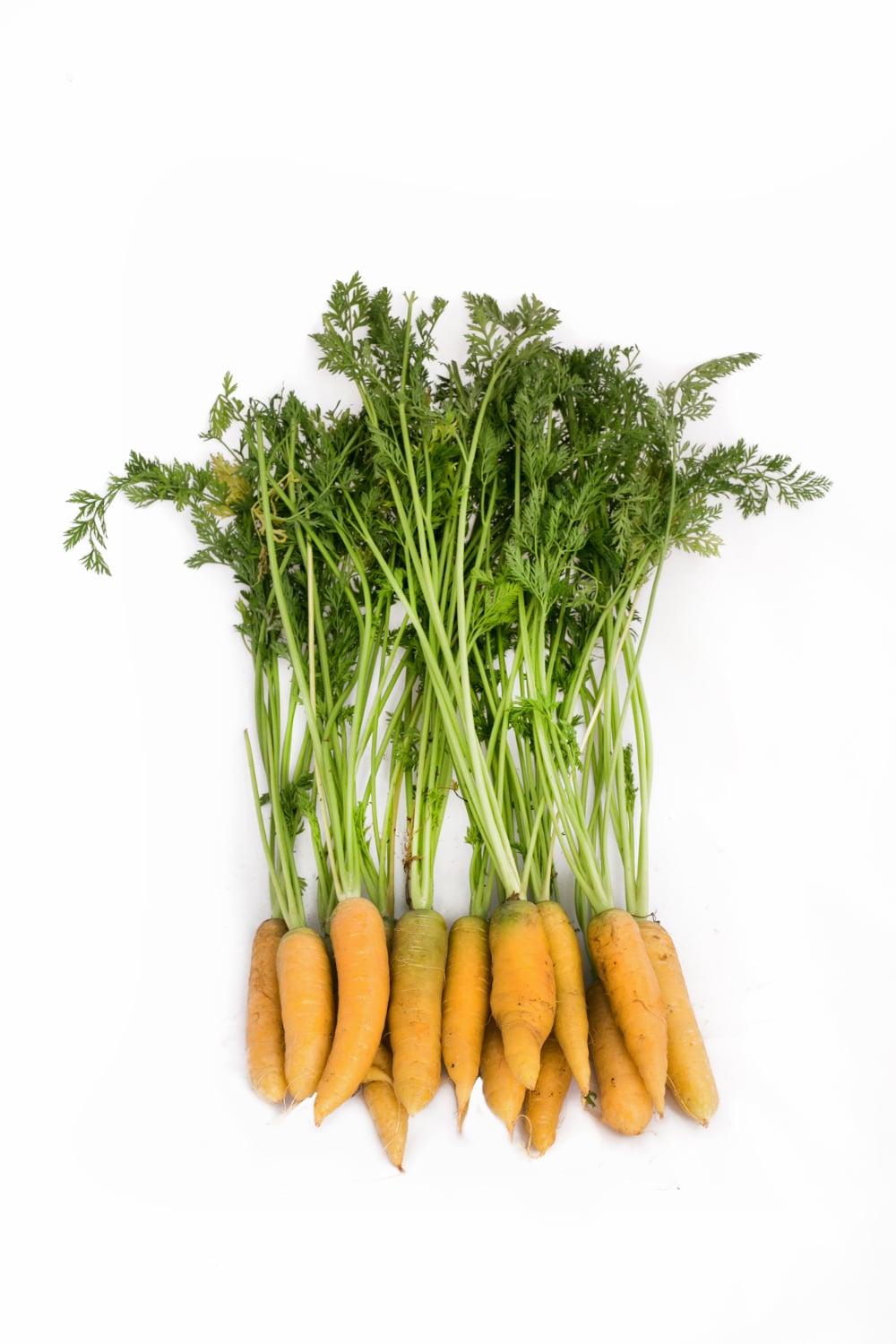

s a root vegetable, usually orange in colour, though purple, black, red, white, and yellow cultivars exist. The most commonly eaten part of the plant is the taproot.
The roots contain high quantities of alpha- and beta-carotene, and are a good source of vitamin K and vitamin B6, but the belief that eating carrots improves night vision is a myth put forward by the British in World War II to mislead the enemy about their military capabilities.
The carrot gets its characteristic, bright orange colour from β-carotene, and lesser amounts of α-carotene, are partly metabolized into, providing more than 100% of the Daily Value (DV) per 100 g serving of carrots (right table). Carrots are also a good source of vitamin A, vitamin K (13% DV) and vitamin B6 (11% DV).
Carrots are 88% water, 4.7% sugar, 0.9% protein, 2.8% dietary fiber, 1% ash and 0.2% fat.
The lutein and zeaxanthin carotenoids characteristic of carrots are studied for their potential roles in vision and eye health.