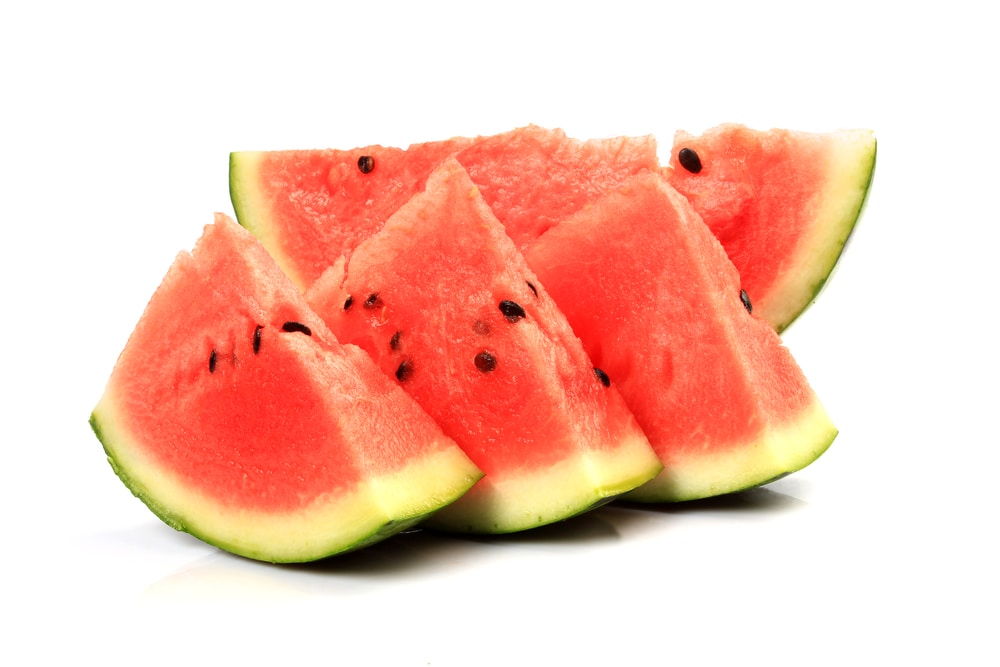


The watermelon is a scrambling and trailing vine in the flowering plant family Cucurbitace¬¬ae. The species originated in southern Africa, with evidence of its cultivation in Ancient Egypt. It is grown in tropical and subtropical areas . The sweet, juicy flesh is usually deep red to pink, with many black seeds, although seedless varieties have been cultivated. The fruit can be eaten raw or pickled and the rind is edible after cooking.
The watermelon is a large annual plant with long, weak, trailing or climbing stems .The rind of the fruit is mid- to dark green and usually mottled or striped, and the flesh, containing numerous pips spread throughout the inside, can be red or pink (most commonly), orange, yellow, green or white.
Watermelons are a sweet, popular fruit of summer, usually consumed fresh in slices, diced in mixed fruit salads, or as juice.
The seeds have a nutty flavor and can be dried and roasted, or ground into flour.
Watermelon fruit is 91% water, contains 6% sugars, and is low in fat .
In a 100 gram serving, watermelon fruit supplies 30 calories and low amounts of essential nutrients. Only vitamin C is present in appreciable content at 10% of the Daily Value. Watermelon pulp contains carotenoids, including lycopene.