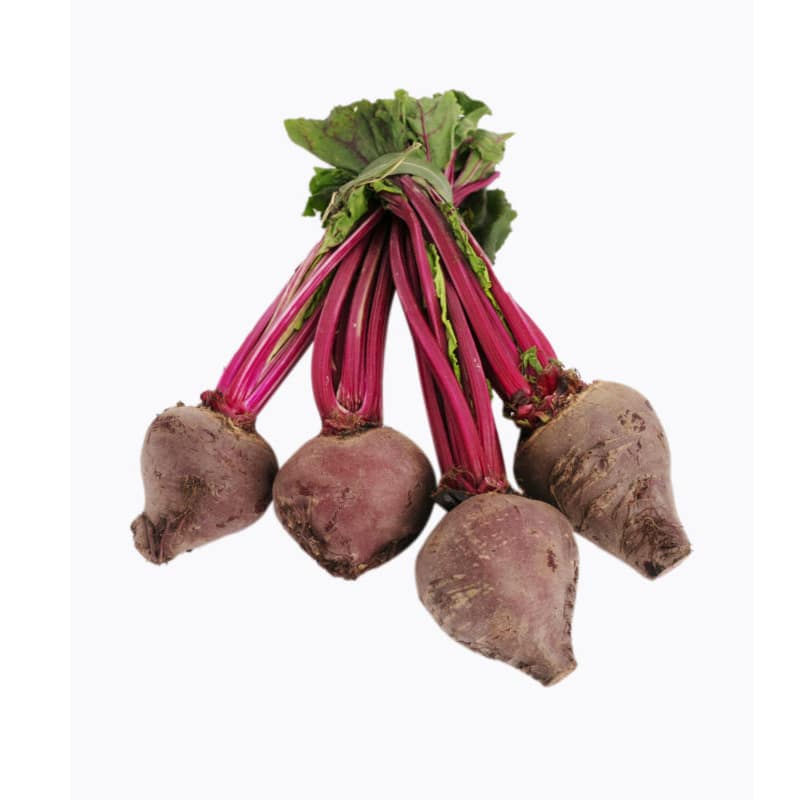

Is the taproot portion of the beet plant, usually as table beet, garden beet, red beet, or golden beet. It is one of several of the cultivated varieties of Beta vulgaris grown for their edible taproots and their leaves (called beet greens)
Other than as a food, beets have use as a food colouring and as a medicinal plant. Many beet products are made from other Beta vulgaris varieties, particularly sugar beet.
Usually the deep purple roots of beetroot are eaten boiled, roasted or raw, and either alone or combined with any salad vegetable. A large proportion of the commercial production is processed into boiled and sterilized beets or into pickles. The green, leafy portion of the beet is also edible. The young leaves can be added raw to salads, whilst the adult leaves are most commonly served boiled or steamed, in which case they have a taste and texture similar to spinach.
Raw beetroot is 88% water, 10% carbohydrates, 2% protein, and less than 1% fat (see table). In a 100 gram amount providing 43 Calories, raw beetroot is a rich source (27% of the Daily Value, DV) of folate and a moderate source (16% DV) of manganese, with other nutrients having insignificant content (table).[14]
Betanin, obtained from the roots, is used industrially as red food colorant, to improve the color and flavor of tomato paste, sauces, desserts, jams and jellies, ice cream, candy, and breakfast cereals, among other applications.
The chemical adipic acid rarely occurs in nature, but happens to occur naturally in beetroot.


